Tuesday, 9 June 2015

On Reading: Pastures of the Blue Crane by H. F. Brinsmead

I am grateful to have reacquired recently a copy of this novel, by the Australian author and environmentalist Hesba Fay Brinsmead (1922 – 2003).  The copy I had as a child got chewed up by the family dog and for ages all I could remember about the book was this beautiful cover and that it had a heroine called Ryl. Pastures of the Blue Crane was first published in 1964; this Oxford University Press edition was produced in 1970. It is Brinsmead’s most well-known work and was made into a television series for the Australian Broadcasting Company in 1969.

The novel opens in a Melbourne summer (November). Sixteen-year-old Amaryllis Jane Merewether, known as Ryl, is leaving school. She believes she is all alone in the world. Her mother is mysteriously absent and her father has long ago abandoned her into the care of his lawyer, who has acted as her guardian and placed her in a series of boarding schools. No demure heroine, Ryl is “calculating, self-centred… and yet not without flashes of charm”. Through “the judicious habit of present-giving”  she has won invites from school fellows so that she doesn’t have to remain at school during the holidays. Now her lawyer-guardian tells Ryl that her father has died and that she has jointly inherited his substantial estate with her previously unknown grandfather, Dusty. They meet for the first time in the lawyer’s office and at first sight seem an ill-suited pair. Their crusty relationship is explored as they find themselves co-owners of a farm called Bundoora in Murwillumbah, North New South Wales. It turns out that this is the place where Dusty was born and raised. On her first morning Ryl is woken by the sun and looks out to see the glittering landscape:  a ‘fanciful’ pasture of rosy pink grass crested with silver and within it a ‘fanciful’ bird – the blue crane. Dusty and Ryl have very different ideas about what to do with their property - and about spending the money they have inherited.  Through her encounters with this remote community, and ultimately her shared battle with Dusty to preserve their home, Ryl finds love, friendship, family, and her future career path, as well as discovering the truth about her parentage.  The novel’s treatment of themes related to age, race, gender and the secret shame of families is somewhat antiquated now but must have been both fresh and daring at the time.  Pastures of the Blue Crane is a well-crafted ‘coming-of-age’ novel , which casts a fascinating light on aspects of life in 1960s Australia.

Monday, 27 April 2015

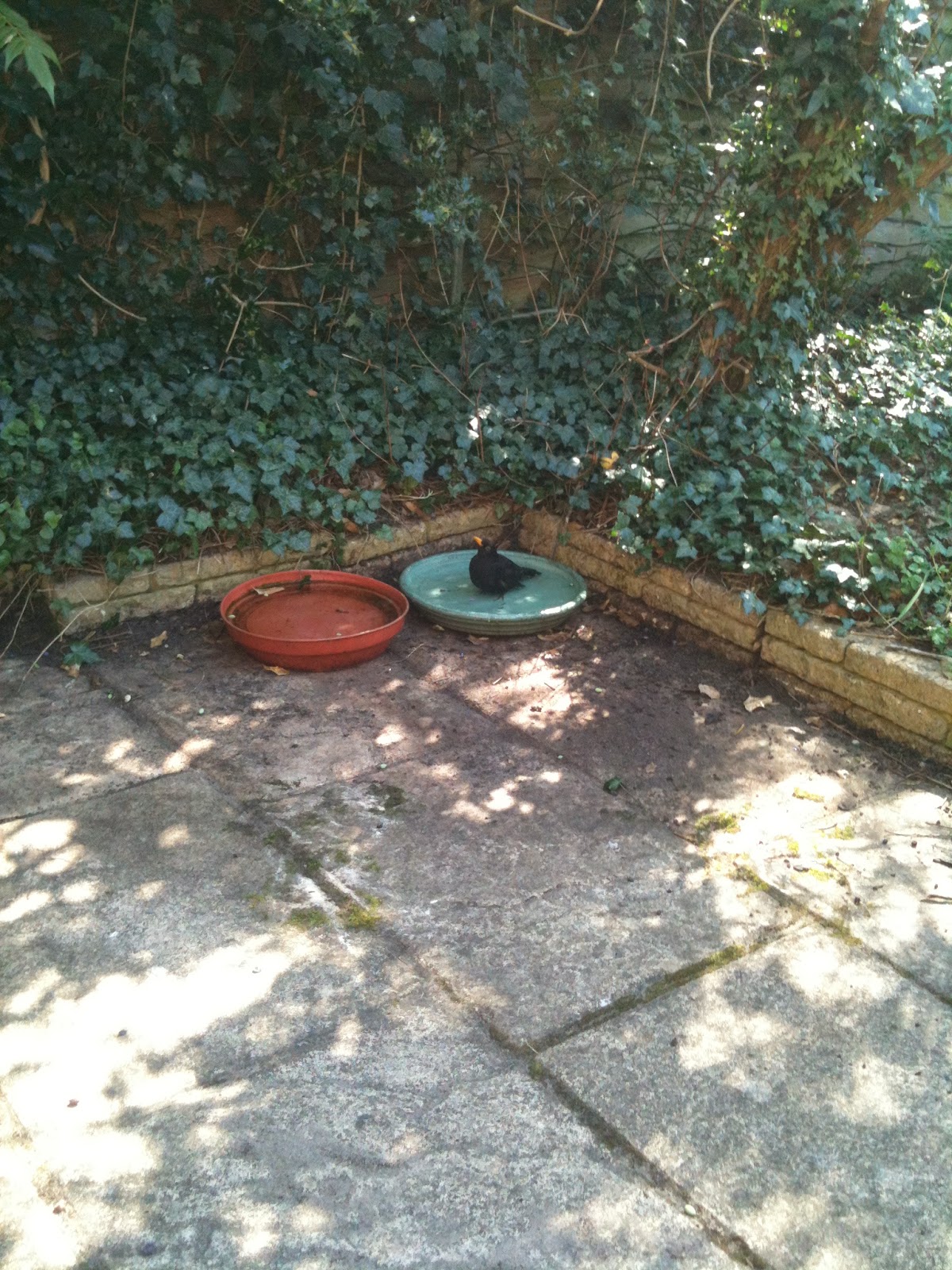
Blackbird's Prayer

Blackbird's Prayer

If you were to ask the blackbird
why she is fervently picking up sticks
from my garden this April morning
I doubt that she would answer
other than to say: And so it is,
for blackbirds.

Susanna Reece

Wednesday, 8 April 2015

Shetland Remembers: 8 April 1940


Blackboard recording events on the night of 8 April 1940
Fascinating talk this afternoon  up at the Sumburgh Head Lighthouse and Visitor Centre by archaeologist Chris Dyer, on the anniversary of the averting of a Luftwaffe air raid on Scapa Flow. The Centre has recreated the Radar Hut that detected the incoming enemy aircraft and has lots of artefacts and photographs telling the story of the scientists and military personnel who made this possible. Chris has also discovered letters sent to the Admiralty and the Northern Lighthouse Board by the Lighthouse Keeper, who was concerned about the 'militarisation' of the site and threats to civilians. The Luftwaffe raid has been described as an attempt at a British 'Pearl Harbor'. The prevention of the raid was undoubtedly due to the careful monitoring on Shetland and was an important event for Britain's defences in the early years of World War II. To celebrate the anniversary, there was also an amateur radio station set-up, complete with old radio magazines and a replica Enigma machine.

As well as the twentieth century military history, Chris talked about the archaeological features that show the use of the land at Sumburgh as an Iron Age Fort, evidence that this has long been a site of strategic importance.


Radar detection at Sumburgh Head

British propaganda poster

Replica Enigma machine
1930s radio magazines
The view from Sumburgh Head

Allan Williams Turret, Toab, Shetland

Shetland Flag flying at Sumburgh


Sunday, 5 April 2015

Easter Day: Arising

What does it mean, this resurrection story? Early in the morning it is the women who go to the tomb only to find that their Beloved is no longer there. When they give witness to having seen the Risen One, they are not believed. Yet gradually the men too are able to see. But what, or who, are they seeing? In Seeking the Risen Christa, Nicola Slee writes of her own experience of Easter Day spent with a group of women, one of whom says: "Jesus died as a Palestinian, Jewish man. Christ rises to be God with us in many different forms..." Perhaps in all forms. Including the Risen Christa. At the local airport here on Shetland there is a book exchange - today I found there a copy of The Barefoot Indian, the making of a messiahress by Julia Heywood. It spoke to me on this day of arising, an invitation to greet the Risen Christa within as well as without. In the church calendar, today marks the start of 50 days to celebrate the risen life. This is not just the life that Jesus stepped into through becoming Christ; rather it is the life in which we are all invited to participate. What will it mean for us to arise, to know the grave, bear our scars, acknowledge our own suffering and that of others; and yet remain hopeful, offering and seeking healing for ourselves and others, coming back out into the world with compassion, caring, gentleness, kindness and courage? "Alleluia, I greet the Risen Christa in you!"


Saturday, 4 April 2015

Great Saturday

This Holy Saturday between Good Friday and Easter Sunday is one of the strangest and perhaps the most forgotten day in the church year. What is this day, how should we spend it? The One whom we have loved and known has gone and will not return. The only certainty we have is that finality. We are grief-stricken, bone-tired, fearful, perhaps even terrified. Nicola Slee calls this day 'the feminist gap': a time of 'shedding one reality in order to discover something new'. Her poem The Christa of Holy Saturday describes powerfully those times when we don't want to get up, would rather stay asleep, weep, rest, remain undisturbed. The late great John O'Donohue's last book Benedictus, also has a wonderful poem called 'for the interim time', where he writes of those times in life when the path behind us has disappeared without any clear way marked ahead. Here, at this mid-point in the Easter Triduum there is an opportunity to remain deeply with our sense of loss and uncertainty, not knowing what is going to happen next or how long we will have to stay here, bereaved and vulnerable. We may be without hope, fearful that it will always be like this now. Or we may be waiting for the new with a sense of curiosity but without any idea of what it will be. Here we must rest and wait. We do not know what deep transitions and transformations may be at work behind the tomb's sealed door.


Friday, 3 April 2015

Good Friday - Scatness Stations

Scatness is a very special peninsula near to where I stay in Southern Shetland,with Iron Age buildings of unknown purport at the tip. My aim today was to take a meditative walk there, stopping at various points to create an alternative Stations of the Cross.

The underlying theme (in part following Nicola Slee's book Seeking the Risen Christa) was to think about the Cross as the Tree of Life, responding to the natural world around me. Apart from Station III, which is as found, I created the five stations by gathering materials from nearby and placing them as felt right to me. Instead of offering my own interpretation of these, I leave you to respond in whatever way is of value to you. Blessed Be She!
Station I

Station II

Station III

Station IV
Station IV

Station V

Station V
 
Station V

Thursday, 2 April 2015

MaundyThursday


Not the Last Supper

I want to believe they were there
before as they were after
sharing the Passover meal.

After all, his table fellowship
wasn't known for its exclusions:
prostitutes, publicans, sinners.

And so often they are there
without being named, or named only
as an afterthought: certain women.

But perhaps this time it was purely
a male affair: lessons in betrayal,
sacrifice, and how to be a servant.

Things that the women already knew.

Did they huddle together wondering
what on earth was going on upstairs?
A farewell supper but not the last.

Perhaps their exclusion served better
to mark the change: the Risen One
will be revealed first to a woman.

The next time they gather here
they will all be together.
Everything will be different.

Susanna Reece