Friday, 31 May 2019

Bewildering

On Sunday I will be 60 and I’m feeling a sense of bewilderment around that. It’s a strange time. I’m full of anxiety, fear, immobility, paralysis: about my life, about our political and existential crises, about the survival of our planet. And at the same time I’m wondering about this ‘bewilderment’, what it might mean to ‘be wildered’.

On the beach today I found a stranded guillemot and was advised by the RSPB to help it back into the sea. As I held its beating body in my hands I felt its mysterious aliveness, felt again my yearning to know and to be known to ‘the wild’.

I wanted to know what was right, what was needed. I wanted to know the unknowable. I don’t know if I did the right thing, I don’t know how injured the guillemot was, whether it will survive. I have to accept this not knowing, to become able to bear it. I have to learn how to live in this painful place of knowing so much and at the same time knowing nothing. 

Tuesday, 26 March 2019

Let's Revoke and Rethink

This week we have a breathing space and a unique opportunity to rethink the future of our country. Thanks to the Wightman case, the UK can unilaterally Revoke Article 50. This option is now rapidly gaining ground. It was mentioned as the preferred option of many who attended Saturday's historic march of over a million people to Parliament. An online Petition calling for revocation has now reached over 5.4 million signatures. Last week it was only 28,000. Please sign the petition- and tell your friends. colleagues, family, neighbours, shopkeepers, fellow commuters, everyone you know to do the same. Let Parliament know the strength of our commitment to safeguarding our rights, freedoms, security and economy.

Whatever you may have heard, the high number of petition signatures is not a fake. You cannot sign multiple times and there is a verification process to ensure only those entitled to sign are doing so. The Petitions Committee is working hard to ensure they can cope with the high volume of traffic on the site. You may have to wait for a while to receive the verification email: until you have verified you have not signed - check your spam filter, be patient, and make sure you have genuinely signed. 

When you have signed, write to your MP and tell them. There are breakdowns of signature by constituency so this is a powerful message to our representatives. 

It is not undemocratic or seeking to overturn the will of the people to ask for revocation and a rethink. In June 2016, 37% of the electorate thought that they wanted to leave the European Union. We can speculate about the many reasons for that vote. But the options now have changed. We have Theresa May's deal that no-one wants and has been rejected by Parliament twice. We have the very real threat of No Deal, which some MPs are disgracefully promoting despite the government’s own assessments of the harm this would do to our country. In three years we’ve gone from a fake promise of sunlit uplands to preparation for food and medicine ‘serous shortage protocols’. Business is already suffering, threatening our jobs and prosperity.

Since June 2016, we have also seen the election of Donald Trump, the rapid rise of far right populism here and abroad, the suggestion of improper influence in the referendum campaign and the Electoral Commission's confirmation that there was overspending by Vote Leave. We have seen death threats to anyone wanting to question our direction of travel. Remain voters have been called citizens of nowhere. Our judges have been called enemies of the people. In June 2017, we had a General Election when the Prime Minister lost her majority - a clear rejection of her 'red lines' for a Hard Brexit. She now relies on the unrepresentative DUP to decide not only the future of Northern Ireland, that voted to stay, but of the whole UK. The wishes of Scotland and the views of all those who voted Remain have been sidelined. There's a real threat to the Good Friday agreement and our fellow EU27 citizens and Britons living in the EU27 have been left in limbo for over 1000 days. The government has been held in contempt of Parliament. Until late last week we didn't know whether we were going to crash out of the EU this Friday!

Still Theresa May will not compromise. This situation is not due to intransigence by the other EU countries but of  the Prime Minister's own red lines. With her signature lack of consultation, she has designated herself as the only arbiter of what Leave voters wanted.  What an unbelievable state of affairs: a British Prime Minister who finds Parliament 'indulgent' and who is taking away her own citizens’ freedom of movement.  But her deal is not wanted by either ‘side’ - it can only pass now if strong-arm party tactics prevail over MPs voting in the national interest. We must demand now, this week, that they put a stop to this and vote to Revoke Article 50 while we decide where to go next. 

Please sign the petition today, tell your MP, and ask everyone you know, however they voted, to do the same.  Please share this as widely as you can. Let's Revoke, Rethink, and rebuild our country.

Tuesday, 11 October 2016

A letter to my MP 10 October 2016

Dear Andrew,

Back in July, when I wrote to you following the referendum outcome, you said: "As we work for the best possible relationship with the EU, I will welcome as ever your thoughts and ideas." I am taking the opportunity to do that but I would also like to ask you for your thoughts and ideas about the point we have now reached. It has been a bruising few months for our country, for our economy, for our civil and political life, and for our constitution.

We now have a new PM and Cabinet pursuing a vastly different agenda from the one campaigned on only 18 months ago. It has been left to a group of concerned citizens with crowd-funding support to challenge the government's assertion that it can use the royal prerogative to trigger Article 50. The Government says that its 'Brexit' strategy must be kept secret and is resisting all attempts for there to be a democratic debate about the terms on which we negotiate. There is every indication that we will be pursuing a so-called 'Hard Brexit', which will be a disaster. This is 'dangerous overreach': it goes way beyond what may or may not have been mandated by the EU Referendum, leaving aside all the lies and disinformation that led up to it. It does not bode well for our country or for any future good relationship with the EU. 

I am still unpersuaded that leaving the EU will address any of the concerns expressed by Leave voters. The clear indications are that it will be bad for all of us. I am shocked that even holding these views is now considered to be somehow 'unBritish' and 'anti-democratic'. I am very, very concerned about this direction of travel and in particular about Mrs May's apparent desire to step aside from the international human rights' frameworks. Many people who voted Remain now say that they feel embarrassed by our country and afraid of where we are heading. It also shocks me that virtually no politicians have had a word for the '48%', other than to say that we must help to make 'Brexit' happen and help make it 'a success' (whatever that means). But even if we wanted to 'get behind it' what is there to get behind? It seems what is meant is that we must 'put up and shut up' while our economy nosedives, our rights are removed and and so-called 'foreigners' are scapegoated. To describe these as 'dissenting' views and then seek to silence and oppress their expression is a very dangerous polemic.That it is coming from our Prime Minister is frankly scary. The Government is disregarding its own definition of  'fundamental British values': Democracy, Individual Liberty, Rule of Law and Tolerance.

In my view we still need Parliamentary involvement in the decision when or whether to trigger Article 50, a vote on the nature of the deal if we really are so foolish as to pursue leaving the EU, and proper scrutiny of the Government's proposed Great Repeal Bill, which will 'put up for grabs' any number of our rights and protections. As an MP you have a duty to act in the national interest as well as represent the interests of your constituents. We need some reassurances and some sign that Parliament is going to step up.

I look forward to hearing your view of this situation and what will you be doing to hold the Government properly to account.

Kind regards,

Susanna

Wednesday, 31 August 2016

Two months later - time to press Parliament to step up and oppose leaving the EU

Two months on, the news about the fallout from the ill-conceived referendum on leaving the European Union continues to be grim. The Government seems determined to press on with "Brexit". The opposition parties (outside of the SNP) are in disarray and, apart from a few honourable MPs like David Lammy, are peddling the line that we have to accept the referendum result. Our politicians seem to be in denial that a constitutional crisis is looming. No-one seems willing to step up for the "Remoaners"!

Although it can all feel rather hopeless, I am firmly of the view that be we must not give up and must not become dispirited. As Parliament reconvenes, here are a few suggestions for things we can still do:

1. Write to your MP to ensure s/he is taking part in the Parliamentary debate on 5 September and, if your constituency voted to Remain, will speak in favour of staying in the EU. This debate has been called following 4 million signatures requesting a second referendum. https://petition.parliament.uk/petitions/131215

2. Go to http://www.nobrexit.uk/roadmap/ for a great summary of suggested actions, including joining Britain for Europe and supporting the various legal challenges that are around.

3. Sign https://petition.parliament.uk/petitions/133540 - this petition asks for Parliament to decide whether we remain in the EU, something the government is currently, shamefully, resisting.

4. You may also want to consider joining More United: http://www.moreunited.uk/join

Although the Remain Campaign has re-launched as Open Britain, supporting this group is not recommended as it has accepted the result of the referendum - See this article in the Independent. It is a shame that so many talented politicians have chosen this route and let down Remain Voters in this way.

And after all that, we just have to watch this space and pray for good outcomes despite the current situation.

Tuesday, 26 July 2016

One month later - further thoughts on the EU Referendum result and why I still oppose its implementation

A month ago, on 26 June 2016, I posted my thoughts and feelings immediately after the  outcome of the EU Referendum on 23 June. I said that this was a time for courage not serene acceptance. Like many 'Remainers', I hadn't wanted this vote in the first place and feared this would be the outcome. (For some of the reasons why, read this brilliant analysis by John Laurenson,) A month later, how is it all looking? Have I come to terms with the vote and accepted all it will mean? That is apparently the British (Katie Razzall) and the sane (Mark Mardell) response. "We are leaving the EU, we must get on with it and work together to make it happen" seems to be the line. Well, I accept that the vote has happened and that this has been the outcome. But does that mean I accept we now have "Brexit"? Not at all. I am British and I am sane and I think what is happening to my country is destructive and mad. I can't, and I won't, let up on trying to stop that madness. Here are 3 of the reasons why, and 5 practical steps for anyone who still feels the same way and wants to do something about it.

  1. We are a Parliamentary, not a direct democracy - Parliament dumped this decision onto us. I believe everyone who voted in the referendum did their best to answer the question posed based on their life experience. However, this was an advisory referendum and is not legally binding. There was very little fact or rational argument at the heart of either campaign. There was no plan for the future.It was not a General Election yet it seems to have been treated as such.  Despite what we are being told, there is no strong mandate to leave the EU. Take a look at this brilliant short film by Andy Knott: "Brexit mandate, what Brexit mandate?". 
  2. The "UK" did not vote to leave the EU - important constituent parts of the United Kingdom did not vote to leave and their voices have a right to be heard. Forcing "Brexit" onto the people of Gibraltar, Northern Ireland and Scotland is morally unacceptable. In Scotland, Nicola Sturgeon has been outstanding within her remit (and ultimate desire for independence). But no-one is speaking up for Remainers elsewhere. It is not just Leave campaigners who disgracefully ran away after the result (and then got shamelessly rewarded by positions in the newly arranged British government). Remain politicians have also abandoned ship and there is currently no effective opposition. Remainers must let our politicians know that we have not gone away. 
  3. Leaving the EU is not in our best interests  - this is more and more apparent every day. Our economy is plummeting, our rights and environmental protections are threatened. None of the problems that people who voted to leave the EU want to see fixed (even when we utterly reject the xenophobia and racism) will be fixed by leaving it, not least because the vote was not primarily about the EU in any meaningful sense. However we voted, we are likely to be dissatisfied whether we have a 'hard' or a 'soft' "Brexit". There are no good scenarios for Britain arising from it. This is a political failure that will be hugely costly for us all and will haunt us for years, if not decades. Life is not binary. We pay our politicians to deal with the nuance and the subtlety, and to act in our best interests. We have seen precious little of that before or after this referendum. Some say that because the Government, most politicians and most of the media have accepted the outcome, so must we. But we do not and we should not. 
Practical steps you might want to take
  • Demand that Parliament takes back responsibility. Ask your MP to:
    • Support Early Day Motion 243 asking Parliament to agree to a second referendum on the terms of an UK-EU exit package or on the UK remaining in the EU.  (Shamefully, only 17 MPs have so far supported this despite Parliament supposedly being 2/3 in favour of Remain. @DavidLammy has been a real star. Where are the rest?)
    • Ensure that there is a Parliamentary vote on whether to trigger Article 50 of the Lisbon Treaty and write in support of the legal case to ensure that such a vote takes place (to be heard in October)
    • Attend the debate on the petition "EU Referendum Rules triggering a 2nd EU Referendum" at Westminster Hall on 5 September at 4.30pm and put points on your behalf as a Remainer. You can also attend yourself. (This petition asked for a retrospective change to the EU Referendum Act to hold another referendum if the remain or leave vote was less that 60% based on a turnout of less than 75%. This was never going to happen - although most certainly Parliament should have included some such protection - and the petition itself has already been rejected by the government. However, because over 4 million people signed it, it will be debated.)

  • Sign and gather support for a new petition asking for a delay in invoking Article 50 until the impact on the UK is reviewed 
  • Support  @TheNewEuropean, the new newspaper for the 48% and post pictures of your favourite places in Europe on the hashtag #myeurope (Recommended - very therapeutic)
  • Join More United  the new movement for British politics and look out for pro-EU events and other initiatives via Move for Europe and @RemaininEU and elsewhere on social media
  • Challenge anyone anywhere who says that we are now "post-Brexit" or have already left the EU, or that the UK voted to do so, including, shamefully, the BBC.

Sunday, 26 June 2016

EU Referendum - A time for Serenity or for Courage?

"God, grant me the serenity to accept the things I cannot change, courage to change the things I can, and wisdom to know the difference." Reinhold Niebuhr's famous prayer has been on my mind today.

In the wake of Thursday's devastating result, should we now shrug our shoulders, say 'that's democracy' and serenely accept the outcome of the EU referendum? When I look at all that blue on the map of England and Wales I am tempted to feel hopeless and ready to despair. I woke up on Friday feeling as if war had been declared, as if everything I had worked hard for all my life had gone and that my country had been taken away. I felt unnerved and destabilised as markets crashed, as I spoke to people in tears and shock, and I felt scared, aware that something very nasty has been unleashed in our society. Nothing that has happened since has reassured me or reduced my sense of grief and bereavement.

I don't feel ready for serene acceptance. I'm not yet prepared to accept that leaving the EU is the right outcome for the UK. I think this is a time for courage. 


During the Referendum campaign, with our two main political parties in disarray, no-one made a really strong case for all the positive benefits of being in the EU, notably for many of the areas with a majority in favour of leaving. A lot of people felt confused and that they didn't know the full facts. Many people who voted to leave don't seem to have understood the full implications of what they were doing. Nearly all of the promises made to them have been broken already or exposed as blatant lies.Some Leave voters are already expressing regrets. Others are engaging in racist criminal behaviour and stirring up a climate of hatred that has been festering for some time but now appears to have had the lid taken off. Our British reputation for tolerance, inclusion and openness (such as it was) may have been permanently tarnished. A recession has likely been triggered in the UK, if not globally.

This was not a General Election. The EU referendum is not legally binding. It is advisory. The advice is that we are a deeply divided nation who need clear and calm leadership and an end to deprivation and austerity. The advice is that all of our capital cities and 2 of the 4 countries of the UK do not want to leave the EU and that doing so is likely to lead to the break up of the United Kingdom. The advice is that only 37.8% of the electorate voted to leave, less than 27% of the total population, and that the young people who voted, and who will be most affected in the long term, overwhelming want to remain. We did not even allow 16 to 17 year-olds a say. The advice is that although 17.4 million people want to leave, 16.1 million don't. A difference of 1.3 million people out of a total population of 65 million is not a sufficient margin to break up our United Kingdom, wreck our economy, risk our security, throw away our rights and destroy our environment.

Please write to David Cameron and to your MP asking them to oppose the invocation of Article 50 and to vote against it in Parliament. Please write to your MEPs, EU ministers and office holders asking them to help us not to make this foolish mistake. And above all please continue to show love, tolerance and compassion towards all our fellow citizens, Leave or Remain, EU or non-EU. We are all one.

We can still step back from this. It will not be easy and it will take courage. My prayer today is that I will have the courage to continue to say to my fellow countrymen and women who voted Leave that I think they are wrong; that I will have the courage to call on our politicians to be courageous in helping us to think again; and that I will have the courage to reach out to others and invite them to believe that they too can have the courage to change things. Time alone will tell if this courage was also wisdom.


Monday, 6 July 2015

Centre Court

Here is a piece I wrote back in July 2003 when Martina Navratiliova won her 20th Wimbledon title with victory in the mixed doubles. It seems I was reading Barbara Kingsolver's High Tide in Tucson at the time, hence the apology, although I can't remember now if it refers to a particular essay in that brilliant collection. It seems appropriate to post this during Wimbledon fortnight and to celebrate the US decision to legalise same sex marriage. Now if they could only bring back serve and volley lawn tennis...

CENTRE COURT
(with apologies to Barbara Kingsolver)

I’m sitting in my friend Anne’s living-room, wearing my favourite faded black denim jeans and shiny new tan Cowboy boots. To fully admire these my feet are up on Anne’s glass-topped coffee-table. We are scoffing peanuts, swigging back Molson beer and watching the game on TV.

But the game is not the World Series or even the Superbowl, although no doubt many otherwise well-adjusted mid-life women could justifiably spend their time on either. The game we are giving up our Sunday afternoon for is being beamed by satellite over five or six thousand miles, from the sedate manicured grass lawns of the All England Croquet and Lawn Tennis Club in Wimbledon, UK.

None but diehard fans of this august institution set amid leafy London suburbs now recalls that tennis was once the Young Turk, invading the sacred lawns of SW19 with gut-strung rackets swinging fiercely against the cylinder-shaped wooden croquet clubs known as mallets. These days Wimbledon is internationally famous, one of the four Grand Slam tournaments that all tennis players dream of winning but few attain. The only one, now, that is played on grass, where the skills and tactics of serve-and-volley are barely mastered by modern players. But still they come, Young Turks and old, to try their hand on grass that has surely been cut with nail scissors.

On court is Martina Navratilova, definitely an old Turk. Nine times Ladies’ Singles Champion and holder of ten further titles in doubles and mixed doubles. Her partner, a smiling, round-faced Indian man called Leander Paes, was born the first year that Navratilova played at Wimbledon, in 1973. Then she was a mousy-haired, sixteen-year-old chubby Czech. Five years later when she won Wimbledon for the first time, beating super-cool, elegant Chrissie Evert in a three-set thriller, she was stateless, a defector, her parents huddling round a TV set near the East German border to watch their daughter’s triumph. Now the Berlin Wall is a distant memory and Navratilova is one of us, a US citizen, lithe, lean and lissom with tinted blonde locks. In crisp shorts her presence on the court is eager and efficient, like a well-bred greyhound, her competitive instincts undimmed. She wears her forty-six years lightly, like a plastic raincoat that can be discarded when the sun shines. Martina Hingis, the tennis champion who was named after her, has recently retired, aged twenty-two. Her two opponents today, Rodionova and Ram, Russian and Israeli respectively, are both more than half her age.

It is evening sunlight on Centre Court, midday in Tucson. As Anne and I settle in there is no sign that the crowd are about to drift away to car or Underground Station, even though the media-dubbed ‘business end’ of the tournament, the Men’s Singles Final, finished nearly three hours ago. They know, as we do, that a piece of history is about to unfold, served up by a middle-aged woman with a pink triangle in her racket.

In 1979 it was Navratilova who helped her then doubles partner, Billie-Jean King, to win her record-breaking twentieth Wimbledon title. The previous record-holder, Elizabeth Ryan, had prophetically died the night before. We fervently hope Billie-Jean, on the verge of her sixtieth birthday, won’t do the same as Martina lobs and volleys her way to equalling that record.

They are our heroes; two sporting women who have surpassed all expectations of our sex, pioneers of fitness, diet and dedication. But above all they have been true to themselves. Living their personal relationships in the spotlight of public attention and judgment they have let their tennis speak, not their lesbianism. Whatever that is. Women who love women, and life, and tennis.

Two sets, two more beers. As the sun descends over South-East England, Anne and I stand and cheer, raising our glasses to a legend, a modern goddess achieving her dream.


Tuesday, 9 June 2015

On Reading: Pastures of the Blue Crane by H. F. Brinsmead

I am grateful to have reacquired recently a copy of this novel, by the Australian author and environmentalist Hesba Fay Brinsmead (1922 – 2003).  The copy I had as a child got chewed up by the family dog and for ages all I could remember about the book was this beautiful cover and that it had a heroine called Ryl. Pastures of the Blue Crane was first published in 1964; this Oxford University Press edition was produced in 1970. It is Brinsmead’s most well-known work and was made into a television series for the Australian Broadcasting Company in 1969.

The novel opens in a Melbourne summer (November). Sixteen-year-old Amaryllis Jane Merewether, known as Ryl, is leaving school. She believes she is all alone in the world. Her mother is mysteriously absent and her father has long ago abandoned her into the care of his lawyer, who has acted as her guardian and placed her in a series of boarding schools. No demure heroine, Ryl is “calculating, self-centred… and yet not without flashes of charm”. Through “the judicious habit of present-giving”  she has won invites from school fellows so that she doesn’t have to remain at school during the holidays. Now her lawyer-guardian tells Ryl that her father has died and that she has jointly inherited his substantial estate with her previously unknown grandfather, Dusty. They meet for the first time in the lawyer’s office and at first sight seem an ill-suited pair. Their crusty relationship is explored as they find themselves co-owners of a farm called Bundoora in Murwillumbah, North New South Wales. It turns out that this is the place where Dusty was born and raised. On her first morning Ryl is woken by the sun and looks out to see the glittering landscape:  a ‘fanciful’ pasture of rosy pink grass crested with silver and within it a ‘fanciful’ bird – the blue crane. Dusty and Ryl have very different ideas about what to do with their property - and about spending the money they have inherited.  Through her encounters with this remote community, and ultimately her shared battle with Dusty to preserve their home, Ryl finds love, friendship, family, and her future career path, as well as discovering the truth about her parentage.  The novel’s treatment of themes related to age, race, gender and the secret shame of families is somewhat antiquated now but must have been both fresh and daring at the time.  Pastures of the Blue Crane is a well-crafted ‘coming-of-age’ novel , which casts a fascinating light on aspects of life in 1960s Australia.

Monday, 27 April 2015

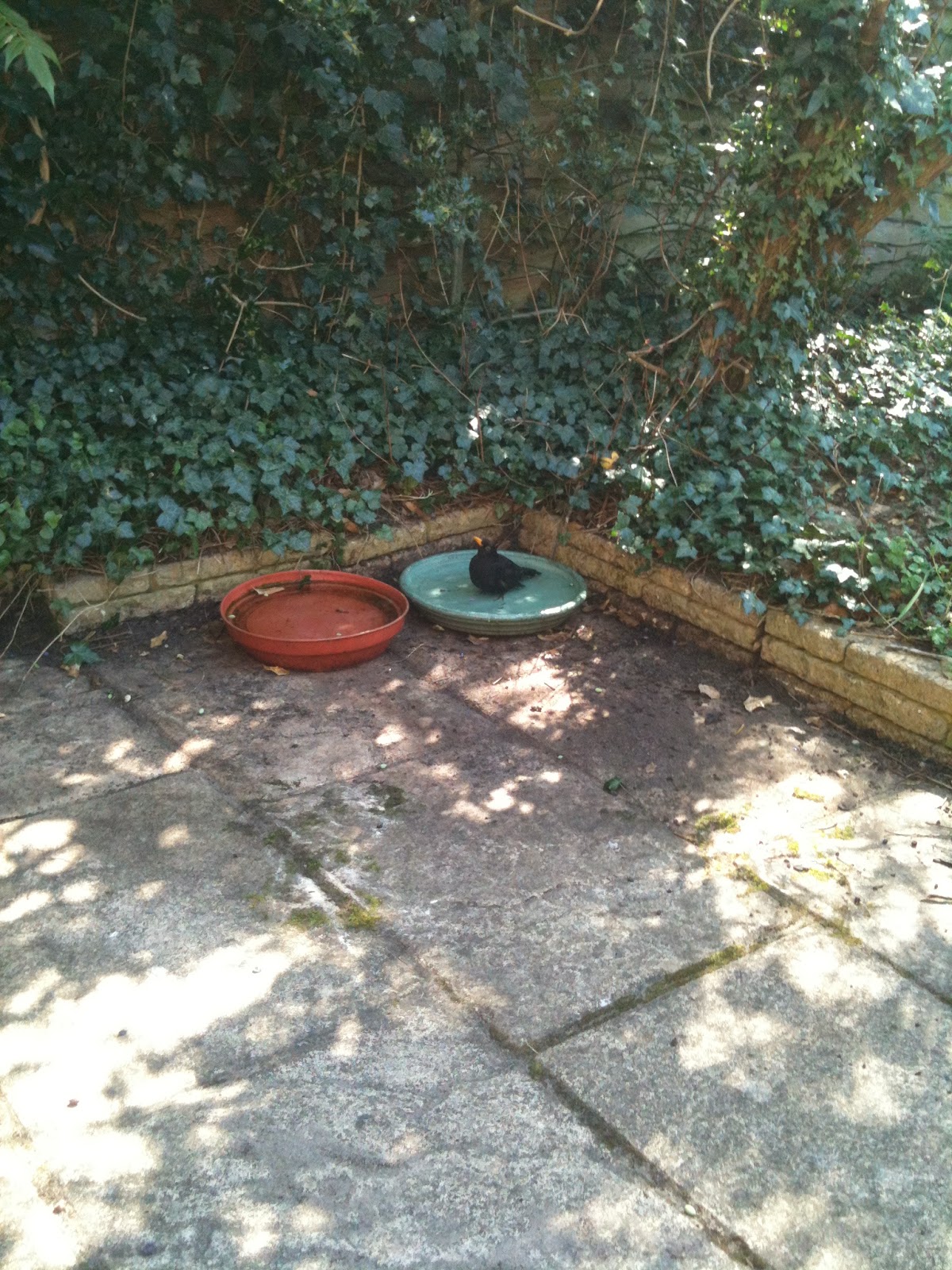
Blackbird's Prayer

Blackbird's Prayer

If you were to ask the blackbird
why she is fervently picking up sticks
from my garden this April morning
I doubt that she would answer
other than to say: And so it is,
for blackbirds.

Susanna Reece

Wednesday, 8 April 2015

Shetland Remembers: 8 April 1940


Blackboard recording events on the night of 8 April 1940
Fascinating talk this afternoon  up at the Sumburgh Head Lighthouse and Visitor Centre by archaeologist Chris Dyer, on the anniversary of the averting of a Luftwaffe air raid on Scapa Flow. The Centre has recreated the Radar Hut that detected the incoming enemy aircraft and has lots of artefacts and photographs telling the story of the scientists and military personnel who made this possible. Chris has also discovered letters sent to the Admiralty and the Northern Lighthouse Board by the Lighthouse Keeper, who was concerned about the 'militarisation' of the site and threats to civilians. The Luftwaffe raid has been described as an attempt at a British 'Pearl Harbor'. The prevention of the raid was undoubtedly due to the careful monitoring on Shetland and was an important event for Britain's defences in the early years of World War II. To celebrate the anniversary, there was also an amateur radio station set-up, complete with old radio magazines and a replica Enigma machine.

As well as the twentieth century military history, Chris talked about the archaeological features that show the use of the land at Sumburgh as an Iron Age Fort, evidence that this has long been a site of strategic importance.


Radar detection at Sumburgh Head

British propaganda poster

Replica Enigma machine
1930s radio magazines
The view from Sumburgh Head

Allan Williams Turret, Toab, Shetland

Shetland Flag flying at Sumburgh


Sunday, 5 April 2015

Easter Day: Arising

What does it mean, this resurrection story? Early in the morning it is the women who go to the tomb only to find that their Beloved is no longer there. When they give witness to having seen the Risen One, they are not believed. Yet gradually the men too are able to see. But what, or who, are they seeing? In Seeking the Risen Christa, Nicola Slee writes of her own experience of Easter Day spent with a group of women, one of whom says: "Jesus died as a Palestinian, Jewish man. Christ rises to be God with us in many different forms..." Perhaps in all forms. Including the Risen Christa. At the local airport here on Shetland there is a book exchange - today I found there a copy of The Barefoot Indian, the making of a messiahress by Julia Heywood. It spoke to me on this day of arising, an invitation to greet the Risen Christa within as well as without. In the church calendar, today marks the start of 50 days to celebrate the risen life. This is not just the life that Jesus stepped into through becoming Christ; rather it is the life in which we are all invited to participate. What will it mean for us to arise, to know the grave, bear our scars, acknowledge our own suffering and that of others; and yet remain hopeful, offering and seeking healing for ourselves and others, coming back out into the world with compassion, caring, gentleness, kindness and courage? "Alleluia, I greet the Risen Christa in you!"


Saturday, 4 April 2015

Great Saturday

This Holy Saturday between Good Friday and Easter Sunday is one of the strangest and perhaps the most forgotten day in the church year. What is this day, how should we spend it? The One whom we have loved and known has gone and will not return. The only certainty we have is that finality. We are grief-stricken, bone-tired, fearful, perhaps even terrified. Nicola Slee calls this day 'the feminist gap': a time of 'shedding one reality in order to discover something new'. Her poem The Christa of Holy Saturday describes powerfully those times when we don't want to get up, would rather stay asleep, weep, rest, remain undisturbed. The late great John O'Donohue's last book Benedictus, also has a wonderful poem called 'for the interim time', where he writes of those times in life when the path behind us has disappeared without any clear way marked ahead. Here, at this mid-point in the Easter Triduum there is an opportunity to remain deeply with our sense of loss and uncertainty, not knowing what is going to happen next or how long we will have to stay here, bereaved and vulnerable. We may be without hope, fearful that it will always be like this now. Or we may be waiting for the new with a sense of curiosity but without any idea of what it will be. Here we must rest and wait. We do not know what deep transitions and transformations may be at work behind the tomb's sealed door.


Friday, 3 April 2015

Good Friday - Scatness Stations

Scatness is a very special peninsula near to where I stay in Southern Shetland,with Iron Age buildings of unknown purport at the tip. My aim today was to take a meditative walk there, stopping at various points to create an alternative Stations of the Cross.

The underlying theme (in part following Nicola Slee's book Seeking the Risen Christa) was to think about the Cross as the Tree of Life, responding to the natural world around me. Apart from Station III, which is as found, I created the five stations by gathering materials from nearby and placing them as felt right to me. Instead of offering my own interpretation of these, I leave you to respond in whatever way is of value to you. Blessed Be She!
Station I

Station II

Station III

Station IV
Station IV

Station V

Station V
 
Station V

Thursday, 2 April 2015

MaundyThursday


Not the Last Supper

I want to believe they were there
before as they were after
sharing the Passover meal.

After all, his table fellowship
wasn't known for its exclusions:
prostitutes, publicans, sinners.

And so often they are there
without being named, or named only
as an afterthought: certain women.

But perhaps this time it was purely
a male affair: lessons in betrayal,
sacrifice, and how to be a servant.

Things that the women already knew.

Did they huddle together wondering
what on earth was going on upstairs?
A farewell supper but not the last.

Perhaps their exclusion served better
to mark the change: the Risen One
will be revealed first to a woman.

The next time they gather here
they will all be together.
Everything will be different.

Susanna Reece


Wednesday, 1 April 2015

St Mary of Egypt

       Today is the feast day of St Mary of Egypt (also celebrated on 2nd and 3rd April in some traditions). She is known as the patron saint of penitents. Most of what we know about her comes from the life written by St Sophronius in the 7th century. The dates of her own life are disputed, although she possibly lived to a very great age.
      It is said that when Mary was 12 years old she ran away to the city of Alexandria and lived there for seventeen years in the grip of sexual obsession, keeping herself through a mixture of begging and spinning flax.
       At the age of 29 she travelled to Jerusalem, paying for her passage by selling her body to pilgrims travelling there for the Great Feasts of the Exaltation of the Holy Cross. Mary too tried to enter the Church of the Holy Sepulchre but felt barred by an unseen force. She interpreted this as being caused by the 'dissolute' life she was living and felt filled with remorse. This led to a conversion experience. After venerating an icon of the Virgin Mary, Mary was able to enter the church and venerate a relic of the true cross.She returned to the icon to give thanks and heard a voice saying "If you cross the Jordan, you will receive glorious rest." She followed this voice and was baptised and then retired to the desert where she lived as a hermit until her death perhaps as much as 70 years later.
   
       I have always been fascinated by Mary, even though so little is known about her. What led her to leave her home at such a young age and become a street child in Alexandria? Was it her sense of adventure or was there something more sinister going on that she felt compelled to leave behind? She appears to have blamed herself for her 'shameful' lifestyle and sexual 'misconduct'. She certainly seems to have got caught up in an unhealthy dependence on sex as a way of coping with her situation. As recent events have shown, even today society remains ready to see sexually exploited young girls as the ones at fault, responsible for what happens to them, rather than holding to account those who exploit them. This seems to be very deep-rooted in the collective psyche and we are still early learners in understanding what is needed to address our blindness and lack of care.

       At the same time, twelve step programmes suggest that the way to recovery from any addiction is to take personal responsibility and surrender to a higher power. Another way of looking at Mary's conversion experience is to see it as the ultimate 'wake-up call', a manifestation of her inner Wisdom that the way she had been living was ultimately self-destructive. For me, Mary's act of penitence can be seen as a heartfelt Yes to the Divine, a decision to choose a better way, responding to the call of One who offers unconditional love and understanding. Her life experience still speaks to me powerfully today, perhaps especially in our extroverted world which so often seems to undervalue silence, solitude and stillness. I too seek 'glorious rest', appreciating times when I can become a hermit for a while, although grateful that it doesn't require me to live alone in the desert for 70 years!
       

Thursday, 1 January 2015

On Reading (and Watching): E. F. Benson's Mapp and Lucia


It was my Dad who first mentioned E F Benson's wonderful books to me. "If you ever come across a book called Miss Mapp," he said, "grab it." As I was just moving to a new job in a new town I had access to a new library and, by one of life's nice moments of synchronicity, it had a copy. This was the early eighties and I think the books must have been long out of print but around that time they were re-published by Black Swan in six jolly paperbacks. (They made a great Christmas present for my Dad!) Tom Holt wrote a couple of sequels and a very new Channel 4 did an excellent TV adaptation of the last 3 books by Gerald Savory. 


Benson wrote his Mapp and Lucia series between 1920 and 1939 and they were hugely popular at the time. Original readers such as Noel Coward, Gertrude Lawrence and the poet W. H. Auden, famously said they "would pay anything for Lucia books". Miss Elizabeth Mapp and Mrs Emmeline Lucas were at first in two entirely separate spheres, each dominating their own small worlds of Tilling (based on Rye in Sussex) and Riseholme (based on the Cotswolds village of Broadway) respectively. The comic potential of bringing them together and giving each a new and more formidable foe is achieved in book four of the series, Mapp and Lucia, and the subsequent two. Apparently readers wrote to Benson begging him to allow Miss Mapp to win at least one round over Lucia but he never did. I think Gerald Savory paid homage to this in one scene he created for the Channel 4 series which was not in the original books: Mapp, played by Prunella Scales, and now married to Major Benjy, has a typically 'poisoned sweet' go at Lucia, played by Geraldine McEwan, on the eve of her marriage to her long-standing friend, the effeminate Georgie Pillson. As she leaves Mallards House (once her home and now Lucia's) she twirls her handbag in triumph. It's a nice touch (perhaps also a coded reference to then Prime Minister Margaret Thatcher?). I regularly watch my DVDs of this series and I recently re-read all six of the books, so you can definitely say that I'm a Benson fan!

Now the BBC has offered a new adaptation, with a screenplay by Steve Pemberton. Given the popularity of the 1984 Channel 4 version it was important that Pemberton felt a sense of creative freedom from the constraints of that success. He certainly takes a lot more liberties with the stories and plot-lines than Savory did but that could work if the essence of the thing is captured. Savory left quite a bit out but those who knew the books could spot the various ways he hinted at these points without it interfering with the re-telling. Pemberton's version has received good reviews - both Michael Pilgrim in the Telegraph and Julia Raeside in the Guardian like it.  Raeside makes a valid point about not keeping either the books or the previous adaptation under glass. As a self-confessed fan of Savory's screening, I was aware of my prejudices and tried to keep an open mind. I'm sure there was room for a good, fresh adaptation; sadly this wasn't it.

There is really nothing to like in Pemberton's Tilling, apart from the genuine Rye location. I wonder what a viewer coming to the series with no prior knowledge would make of it all. The main problem is that it just isn't funny. All Benson's subtlety and charm have been squeezed out and replaced with a kind of grand-guignol. There's an over-reliance on contorted facial expressions, with incessant music playing over the dialogue, which has little of Benson's sparkling wit. It's as if we are being asked, do you get it yet, do you get it? Well, frankly, no. Pemberton's changes, while not necessarily inconsistent with the characters, seemed mostly unnecessary and underplayed the brilliance of the words, situations and characters Benson actually did create. There was a good switch in Episode 1 when Lucia performs a tableau of Elizabeth I (as she had in Riseholme) at her Garden Fete in Elizabeth Mapp's home Mallards, which she is renting, rather than the more accurate Britannia; this allows for a nice moment when Mapp thinks that the cries of 'Elizabeth' are for her. I think Benson might well have appreciated this. However, we then have Episode 2 almost entirely taken up with a story about an Indian Guru who turns out to be a London chef. It's a good story but it occurs in Queen Lucia, a book set in Riseholme with other characters. It seems strange to twist the plot so much to include this story when there is so much going on in "Tilling proper". It surely can't be just to introduce Georgie Pillson's two rather grotesque sisters, who never appear in Tilling in the books and seemed more like characters from Pemberton's earlier success, the League of Gentleman?


In general, the cast were also a real letdown. One review said that the players all looked like they wanted to be there but I disagree. It didn't look like they were enjoying themselves at all, or if they were, it wasn't due to anything to do with Benson. Neither Miranda Richardson as Mapp nor Anna Chancellor as Lucia seem to have really got stuck into the essence of their characters' motivations and purposes, partly because Pemberton has ditched the progressive nature of Benson's narrative and muddies them around in ever-decreasing circles. I think Richardson is trying to be appropriately nasty and Chancellor to convey Lucia's insecurities but lingering shots of knotted eyebrows and protruding teeth don't really cut it. On the plus side, it was good to have the vicar's wife back, Mrs Evie Bartlett (missing in the Channel 4 adaptation), nicely played by Poppy Miller. Mark Gatiss as Major Benjy and Nicholas Woodeson as Mr Wyse also showed potential,but weren't really allowed to fly. Pemberton's casting of himself as an uber-insipid Georgie Pillson was uninspired. The fact that he has left out significant characters and plot-lines, such as those involving Lucia's purchase of Grebe and its subsequent exchange for Mapp's home Mallards, the opera diva Olga Braceley and a certain Cotswolds' recipe for Lobster, suggests he is hoping to come back for a second go. Let's hope not.

Too much Pemberton, too much League of Gentleman, not enough Benson: what a disappointment the BBC's new Mapp and Lucia has turned out to be. I won't be downloading Episode 3. You'd be much better off reading the original books. Indeed, I strongly encourage you to do so.